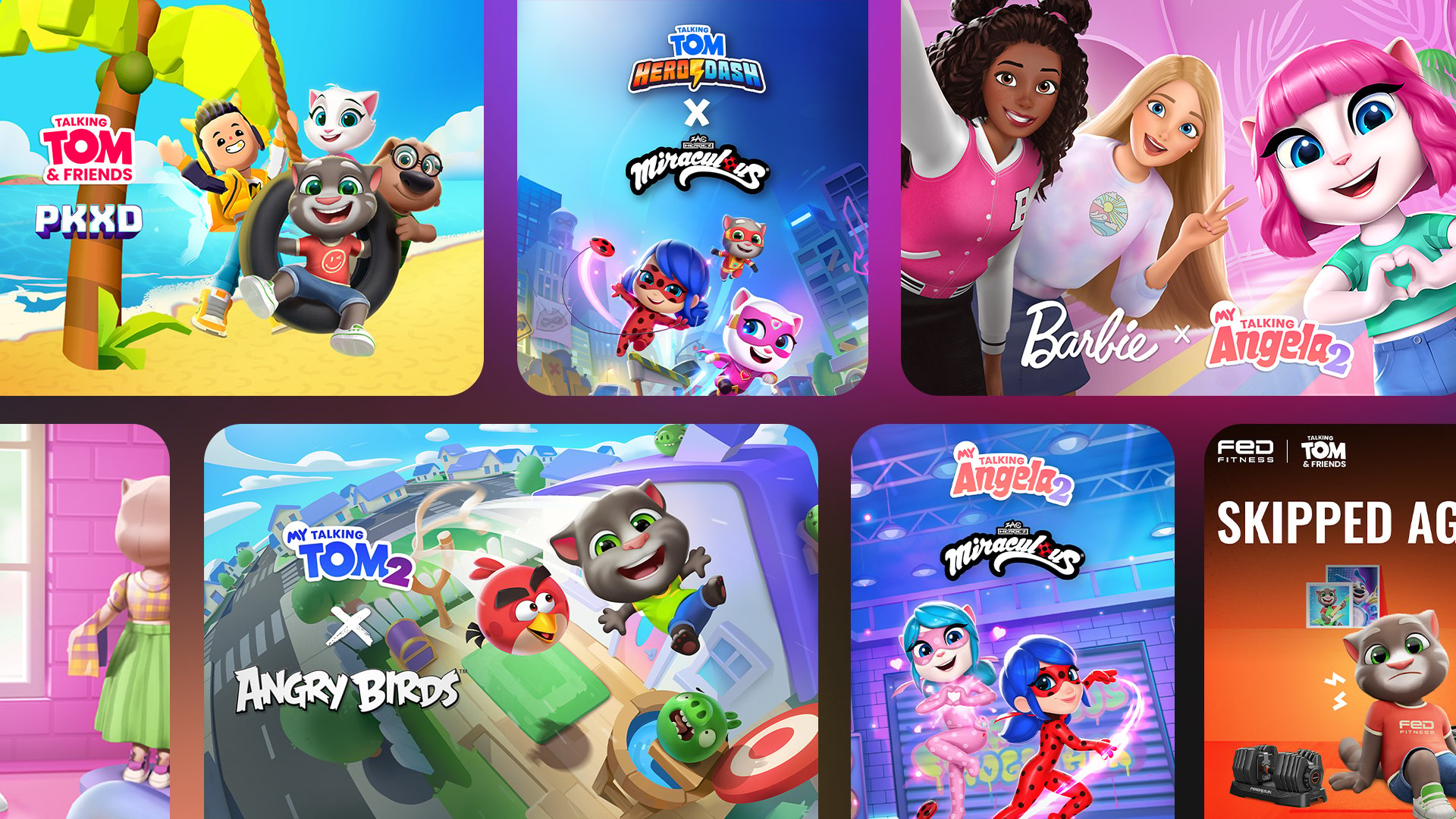
For a long time, partnerships were primarily a way for brands to expand into new categories. Strong IP moved into fashion, food, and retail, building presence through products that increased visibility and commercial scale. What is happening now is, in many ways, a shift toward something else. Partnerships are increasingly moving into media, storytelling, and shared universes, where the focus is no longer on where a brand appears, but on how it interacts with another world and what that interaction creates. For us, this shift is not theoretical, it directly influences how we build the Talking Tom & Friends brand.
Treating Partnerships as Part of How the Brand Is Built
At Outfit7, partnerships have become part of how we think about building the Talking Tom & Friends brand itself. We approach collaborations not simply as a way to extend the brand, but as a way to actively shape it. In conversation with Tadeja Irmančnik, Brand Partnerships Lead at Outfit7 (Ekipa2 Subsidiary), this perspective becomes clear. “The starting point for us is not what we get out of a partnership,” Tadeja Irmančnik says. “It’s what it allows us to do with the brand that we couldn’t do on our own.”
This means that we do not approach collaborations as something layered on top of the brand, but as something that actively contributes to how it develops. Other brands can influence positioning, expand the narrative, and introduce new perspectives that would be difficult to create internally. In that sense, partnerships become part of the brand-building process itself, shaping not only what the brand is, but what it can become.
A Multi-Platform Ecosystem That Shapes How Partnerships Work
This way of thinking about partnerships is closely connected to how Talking Tom & Friends is structured as a brand. Because it exists across a broader ecosystem that includes mobile games, YouTube, social platforms, and more, collaborations are not limited to a single entry point. Instead, they can be developed in different ways, depending on what the idea requires.
For us, this structure is not just a distribution advantage, it defines how we build partnerships. It creates flexibility not only in execution, but in how partnerships can evolve. Some collaborations begin in one space and expand into others, while others move in the opposite direction. In many cases, the most impactful partnerships are those that are not confined to a single format, but develop across multiple touchpoints over time. This allows both brands to build something together, rather than simply appearing alongside one another.

Looking Beyond Obvious Brand Alignment
Because partnerships are not limited to a single format, they are also not limited to obvious or expected combinations. The flexibility of the Talking Tom & Friends ecosystem allows us to approach collaborations in a more open way, where the starting point is not only alignment or overlap, but also what the brands could become.
Alignment remains an important part of any collaboration, but it is not the only way we approach it. “Our fans don’t connect with just one type of content or one kind of brand,” Tadeja explains. “They engage with many different things at the same time, and that’s something we try to reflect.”
For us, this creates room for a more exploratory approach. Some collaborations come from clear and expected connections, while others are less obvious but open up new creative directions. Partnerships are not only about reinforcing what the brand already is, but about expanding it, introducing new audiences, new contexts, and new ways for the brand to exist.
Keeping the Brand Coherent
As partnerships become more open and exploratory, maintaining a clear sense of direction becomes even more important. The ability to move beyond obvious alignments creates new opportunities, but it also requires a stronger understanding of what the brand is and where it is going.
As partnerships become more visible across industries, the challenge is no longer access, but direction. The number of potential collaborations continues to grow, but not all of them contribute in the same way. For us, what matters is not participation, but whether a partnership supports that direction. “The question is not whether something is big or visible,” Tadeja says. “It’s whether it moves the brand in the right direction.”
That distinction shapes how we make decisions. Some opportunities naturally align with what we are building, while others, even if attractive on the surface, do not add to that trajectory. The role of partnerships is not to follow momentum, but to reinforce and extend the brand in a way that remains coherent over time.
.jpg)
Focusing on What the Audience Actually Experiences
That clarity of direction ultimately shows up in how the brand is experienced. Partnerships are not only strategic decisions, they shape what audiences see, feel, and take away from the brand over time.
The real impact of a partnership is not in the moment it launches, but in what remains afterwards. In some cases, very little carries forward, while in others something shifts in how audiences experience the brand, how they connect with it, and what they expect from it over time. This is where partnerships begin to matter differently, not as isolated moments, but as part of how the brand is experienced on an ongoing basis. We aren’t looking for 3-week live-ops sprints. We’re looking for long-term, multi-category partnerships that give us the breathing room to be creative; both narratively and commercially. Our goal is to offer fans something substantive, not just another repainted flash campaign.
For us, that is what we design partnerships around. They need to translate into something meaningful for the people engaging with the brand. “We want to give fans something they wouldn’t get from our brand alone,” Tadeja says. “Something that feels new, but still feels like it belongs.”
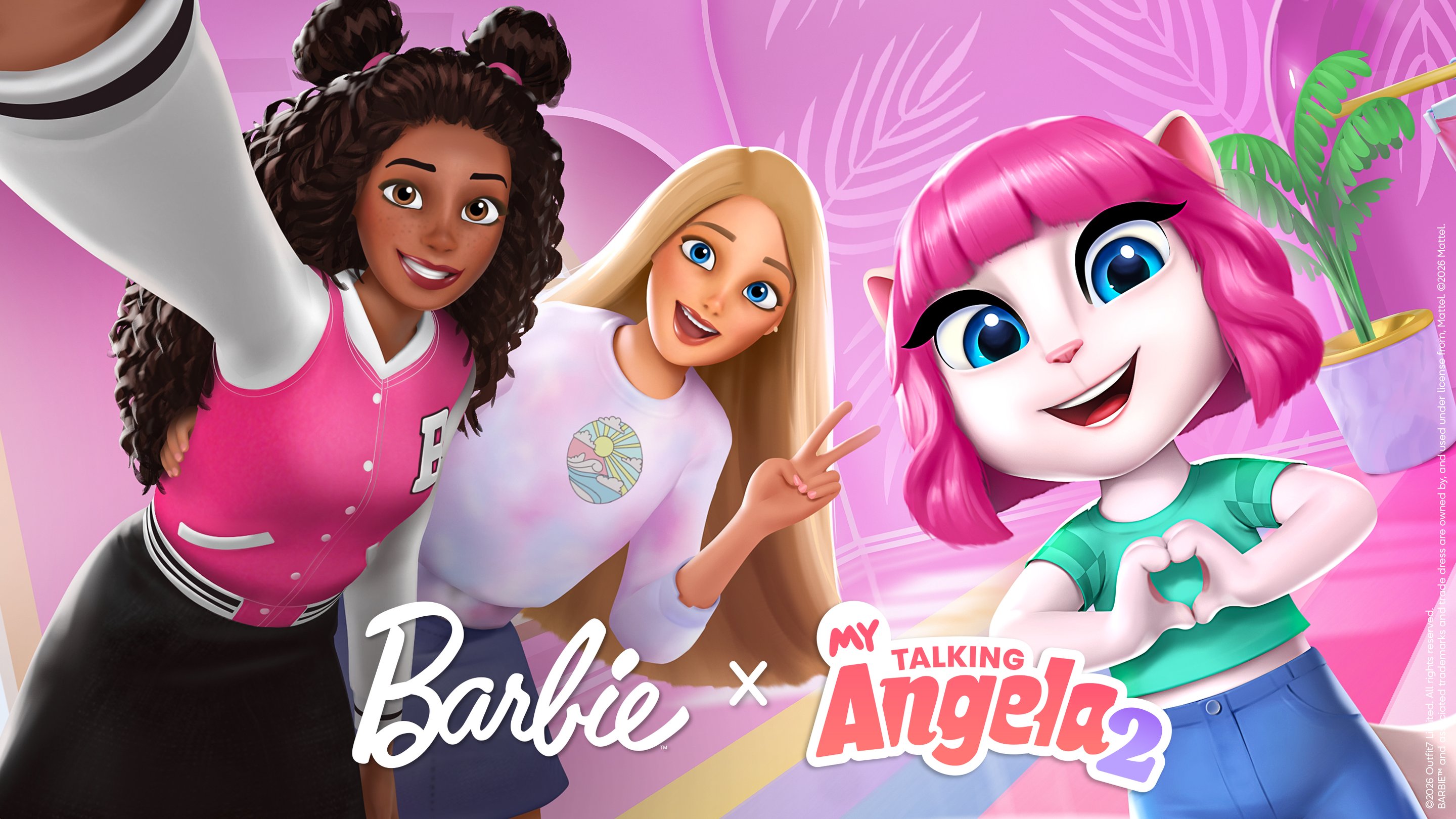
The collaboration with Barbie™ reflects that approach, not only because of its scale, but because of what it allowed us to build. It introduced a new layer around self-expression and identity and translated it into an experience that felt natural within the Talking Tom & Friends universe, creating a connection that went beyond simple visibility.
A Direction That Continues to Grow
The way partnerships are approached today says a lot about how a brand sees itself. Some treat them as extensions, carefully controlled and clearly defined. Others allow them to be more open, knowing that something unexpected might come out of it.
For us, that difference is not abstract, it is something we actively build through the choices we make. Over time, those choices become visible. Not in any single collaboration, but in how the brand evolves as a whole, what it becomes associated with, and how it continues to stay relevant without repeating itself.
In that sense, partnerships are less about what is created in the moment, and more about what direction they quietly set.